The Tye Trophy Competition will take place again in 2025 – see below for details of the competition held in 2024.
The Tye Trophy highlights some of the best farms in the North of England and recognises the contribution of farmers to conservation and environmental improvement.
The overall winner of the Tye Trophy competition is also entered into the national Silver Lapwing Award the following year.
How it works
Three farms are nominated from seven areas of the North of England before the end of March. Areas are Cumbria, Lancashire, North Yorkshire, East Yorkshire, South and West Yorkshire, Tyne Tees and Northumberland.
A judging panel of three farmers will visit each farm in early May and a winner for each county is selected. These seven winners are then judged by a regional panel in early June.
Judging is based on the integration of wildlife conservation and environmental improvement within their commercial farming operation.
John Fenton, Lead Regional Judge of the Tye Trophy said:
Every year I am always struck by just how much conservation work is being carried out in the countryside, much of it unfunded, by farmers and is not seen or understood by the general public.
That is why this competition is so important, it is a chance to champion the best in farming. For example, one the highlights of this year’s competition have been the number of wading birds we have seen, particularly curlew, oyster catchers and lapwing.
The award ceremony takes place outside the President’s Pavilion on Wednesday of the Great Yorkshire Show, where the overall winner will be announced and will receive the Edwardian shell trophy that was originally donated by Mrs Alison Saville in memory of the Tye family.
For more information contact Helen Slater by calling 01423 541000 or email helens@yas.co.uk
Our 2024 winners
Bainbridge Farms – Overall Winner & Northumberland Area Winner
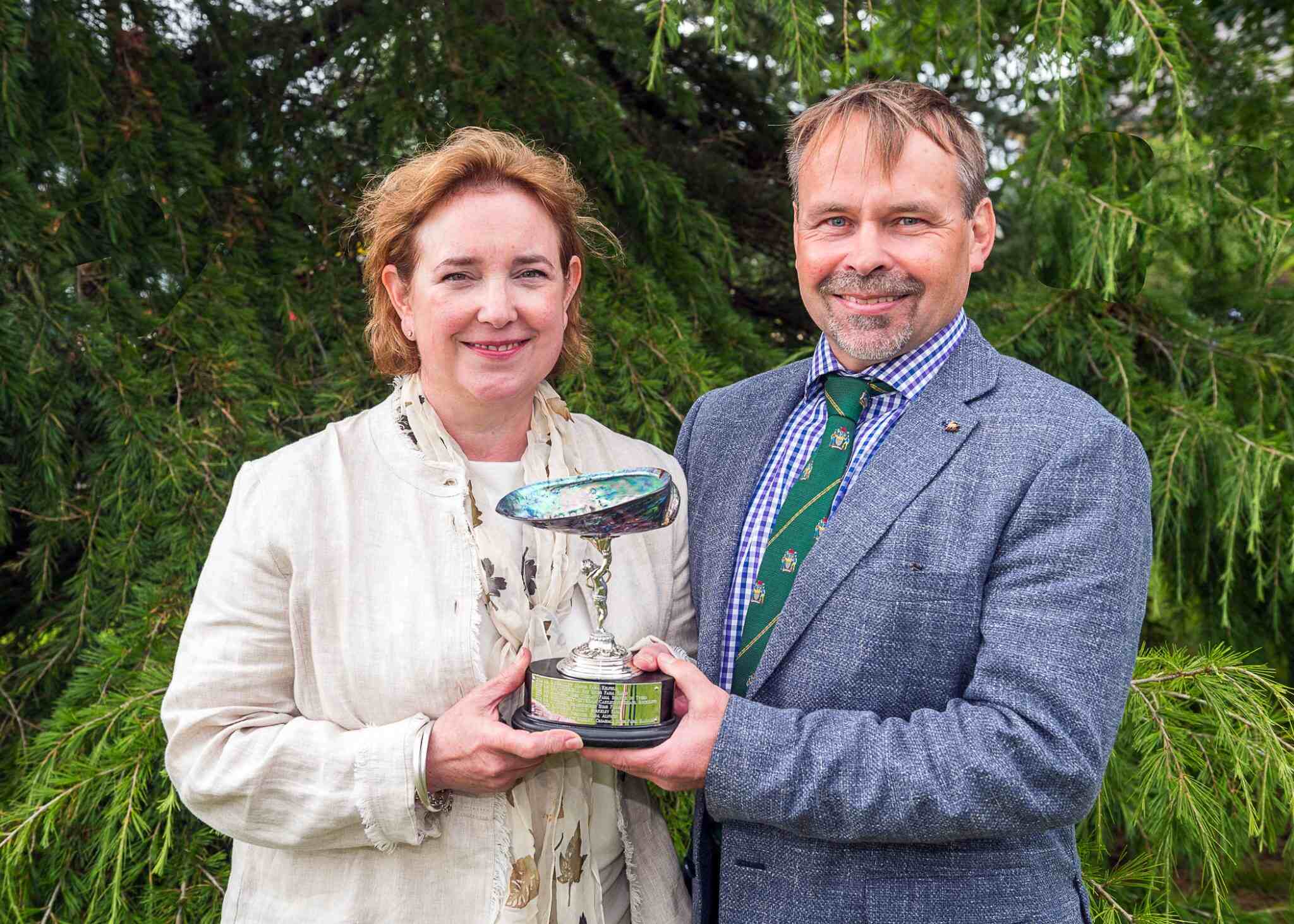
Simon and Claire Bainbridge of Bainbridge Farms, Donkin Ridge, Cambo, Morpeth farm 1,650 acres with 180 suckler cows and 1,300 sheep and grow early crop silage.
Their conservation efforts at the organic farm have included replanting hedges and have resulted in many species of birds taking up residence, including oystercatchers, lapwings, curlews and cuckoos.
They also provide education access and have a school room.
Simon said:
I just can’t believe we have won – I am literally gobsmacked. For all farmers across the north it has been a miserable eight or nine months with the weather but there were some amazing farmers there and we are very honoured to have won this special award.
Croglin Hall Farm – Cumbria Area Winner
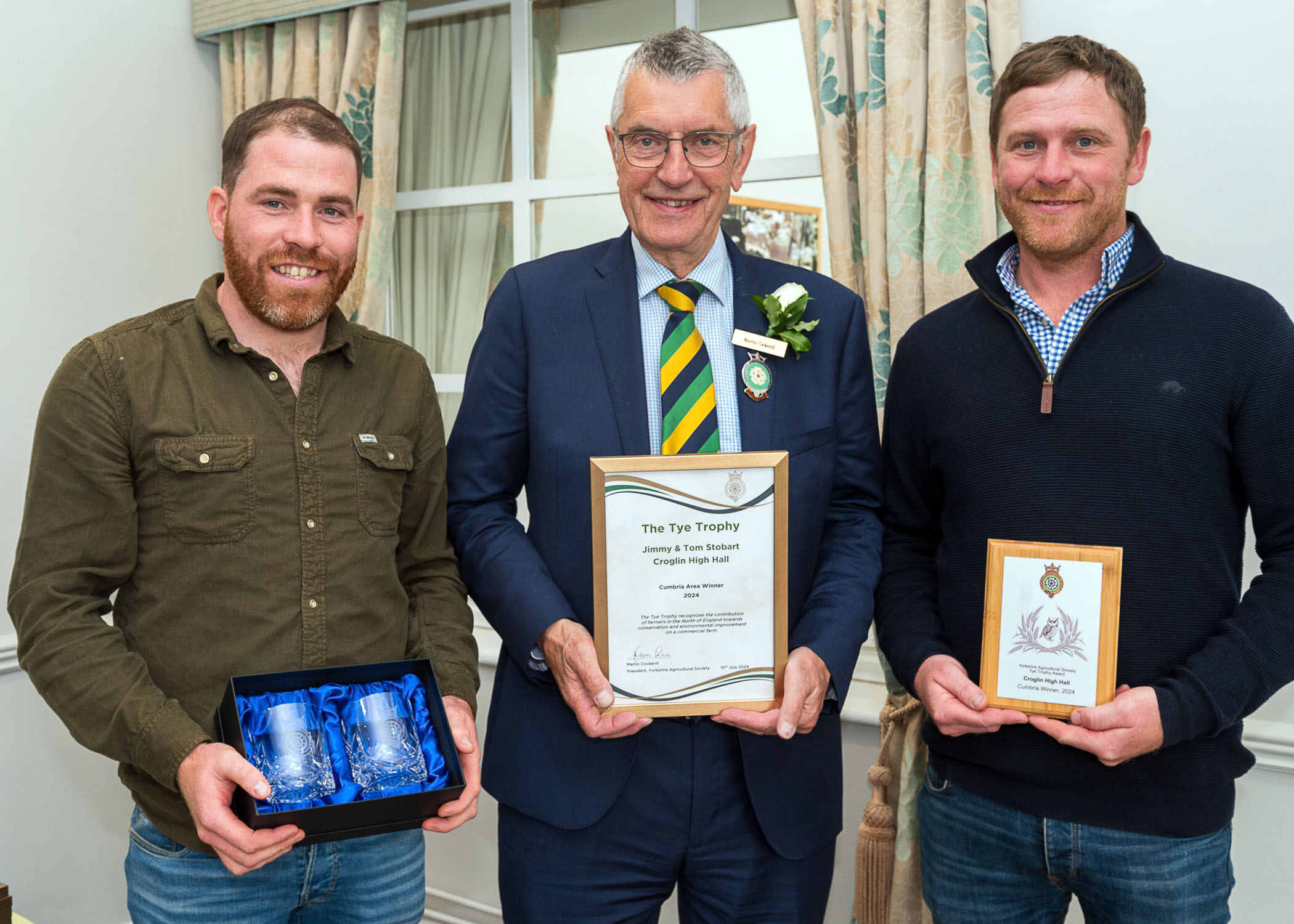
Jimmy and Tom Stobart farm over two units and some tenanted moorland, and employ a New Zealand grazing system on herbal leys.
A number of shelter belts have been planted with the aim to make them into grazed woodland in the future, and water courses have been fenced off.
They have also diversified into a campsite with showers and a loo block and recently opened a sawmill producing fencing posts stakes and rails.
In addition, the pair operate a shearing business.
Wold Cottage Farm – East Yorkshire Area Winner

Derek and Katrina Gray run a 200-acre mixed farm, growing cereals that are all direct drilled, and have a flock of 120 sheep.
Over the years, they have planted significant woodland and hedges and areas of wild bird mix.
They have restored a derelict farmhouse which they run as a B&B and operate holiday let cottages and a caravan park, all of which are heated using a straw biomass boiler.
The farm is also serviced by solar panels and battery storage.
Gazegill Organics – Lancashire Area Winner
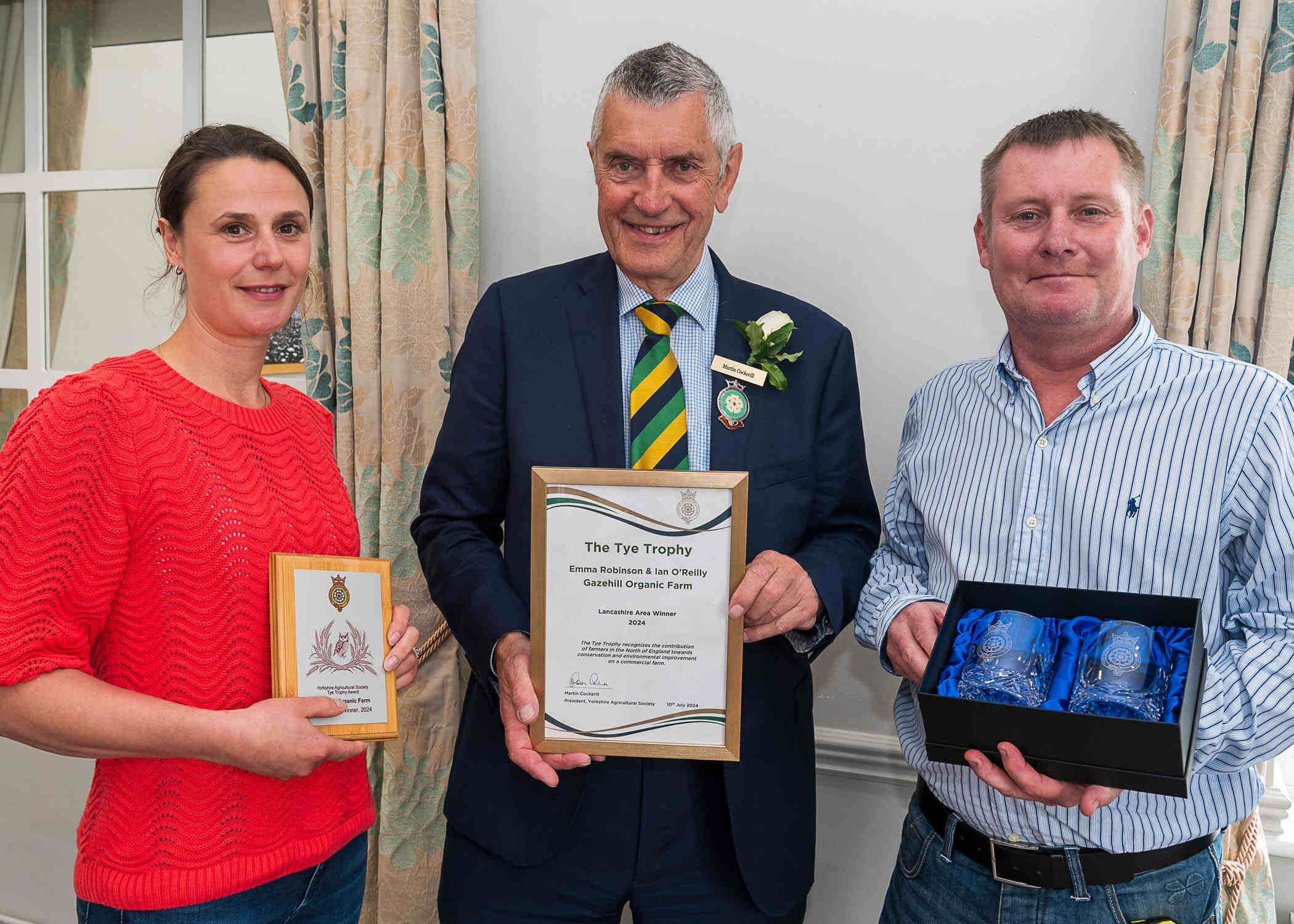
Emma Robinson and Ian O’Reilly operate a 350-acre organic dairy farm comprising of a Shorthorn dairy herd, as well as pigs, goats and sheep.
Their farm setting includes wildflower meadows and a farm shop.
Milk from their dairy enterprise is bottled on the farm and marketed through the farm shop and online.
Home reared pork, lamb and goat meat is also sold through their retail business and such is its success that a larger farm shop is in the pipeline.
Their facilities include a totally off-grid restaurant which relies on solar power and woodfired ovens. Eleven weeks after opening the restaurant, it won an award.
Kexwith Farm – North Yorkshire Area Winner

Ray and Sue Ridley’s upland farm carries 120 Swaledale ewes and a small herd of White Park cattle.
They have had 7,000 meters of drystone walls restored, have undertaken a bracken eradication programme, planted trees and wildflowers.
A striking species present in their wildflower meadows is the Mountain Pansy.
Stunning shows of curlews and chicks, lapwings and oyster catchers can be seen at the farm.
Tyers Hall Farm – South & West Yorkshire Area Winner

The Dickinson family’s mixed farm incorporates a Jersey dairy herd, and arable and beef enterprises.
Their milk is supplied to Longley Farm dairies and they co founded the Dearne Valley Farms Cluster Group to attract more funding.
The farm is entered into a Mid Tier Countryside Stewardship agreement and a number of shelter belts have been planted, flanked by new hedges.
The farm now has 25km of hedgerow, with 1km laid every year. This network of hedgerows connects old and new woodland
Four wildlife ponds have been created and an orchard has been restored, and educational access is provided for school children.
Wider public access is also encouraged with the provision of new rights of way.
A bird survey of the farm identified linnet, skylark, yellowhammer, yellow wagtail and lapwing.
Low Ways Farm – Tyne Tees Area Winner
Karen Scott’s 100-acre upland farm comprises of sheep and wildflower meadows with a good level of diversity.
The farm has also been diversified into holiday lets and a bunkhouse which is used by Duke of Edinburgh students and visiting schoolchildren.
Karen also operates a tea room and restaurant at weekends where there is an emphasis on local produce.

Picture credit: Tony Pick
National Silver Lapwing Award
Each year the overall winner of the Tye Trophy goes forward to take part in the Silver Lapwing Award.
Like the Tye Trophy, this is an award for farmers who have demonstrated real commitment to habitat conservation and species whilst integrating their environmental management within their overall farm business.
The judges also consider the farm’s approach in conserving natural resources as well as its historic features that would include good soil management, efficient use and protection of water quality and energy.
In 2024 David and Rob Cooil, who run Ballagawne Farm in Ballabeg, Isle of Man won the Silver Lapwing Award, which demonstrates the high standards of the Tye Trophy.