The Tye Trophy is awarded each year by the Yorkshire Agricultural Society to highlight and celebrate some of the best farms in the North of England, recognising the contribution farmers make to conservation and environmental improvement.
The Tye Trophy Competition will take place again in 2026. Here, we explain how it works and share details of the winners of the 2025 competition.
The overall winner of the Tye Trophy is entered into the national Silver Lapwing Award the following year.
Nominations & Judging
Three farms are nominated from seven areas of the North of England before the end of March. The areas are Cumbria, Lancashire, North Yorkshire, East Yorkshire, South and West Yorkshire, Durham and Tyne and Wear (formerly Tyne Tees), and Northumberland.
A judging panel of three farmers will visit each farm in early May and a winner for each county is selected. These seven winners are then judged by a regional panel in early June.
Judging is based on the integration of wildlife conservation and environmental improvement within their commercial farming operation.
Celebrating our winners
The award ceremony takes place outside the President’s Pavilion on Wednesday of the Great Yorkshire Show, where the overall winner will be announced and will receive the Edwardian shell trophy that was originally donated by Mrs Alison Saville, whose family ran the Tye Trailers business.
For more information contact Helen Slater by calling 01423 541000 or email helens@yas.co.uk
Yorkshire Agricultural Society Chief Executive Allister Nixon said:
This competition demonstrates to the farming industry and the general public how farming can combine the twin goals of sustainable food production and looking after our land and environment.
It encourages all farmers with examples of what is already happening around the north and acts as an inspiration of what can be achieved.
Our 2025 winners
Long Bank Farm, Keasden – Overall Winner & North Yorkshire Winner
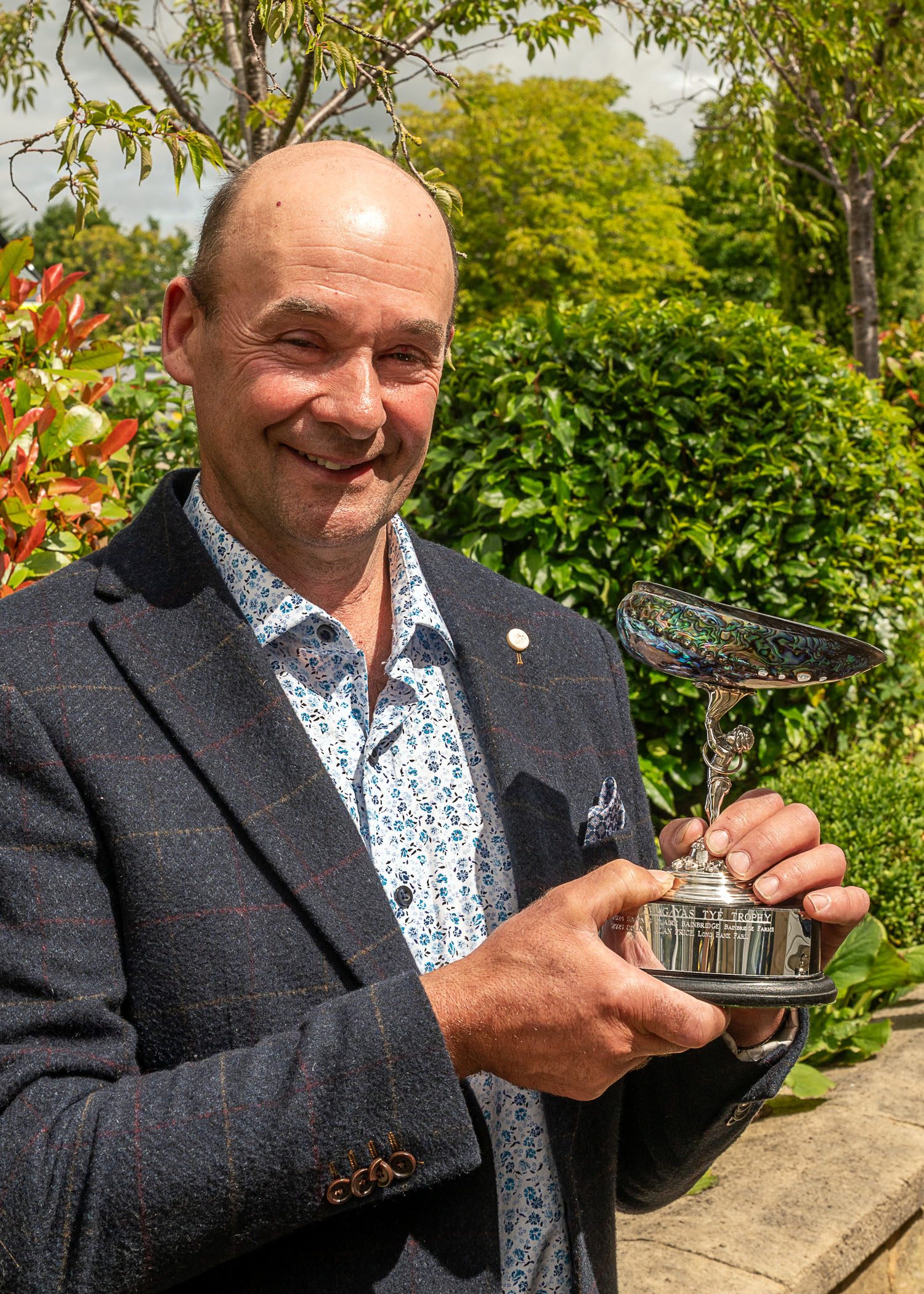
Father and son, Alan and Colin Price of Long Bank Farm, Keasden, near Clapham, North Yorkshire are our 2025 overall winners.
Alan’s father took on the farm in 1943 and the family have always tried to work in tune with nature and the elements on the mixed farm which runs 40 dairy Holsteins and 200 sheep.
The upland farm bordering Clapham Common has been organic farm since 1999. In 2015, one of the meadows on the farm was restored through the Bowland Hay Time project and Organic Higher Level Stewardship and this meadow has increased in plant species diversity year on year since then.
Colin works closely with the local RSPB team to manage the farm for breeding waders and a breeding wader survey is carried out every year. A nest camera on a curlew nest in one of the meadows was added during 2022.
Colin has been involved with the ‘Clapham Curlew project’ since its inception in 2021 and in 2023 he hosted a volunteers’ breeding wader survey training day organised by the RSPB.
All meadows on the farm are not cut until July and the farm has established itself as a successful nesting ground for curlews, lapwings and oyster catchers, with numbers increasing year on year.
Over the past two winters they have used Farming in Protected Landscapes (FiPL) funding for hedgelaying, in-field parkland trees (as successors to large oaks in some of the field parcels), and replacement of stiles with kissing gates. They have also planted 5,500m of hedges.
Colin is a long-term parish councillor, a member of the Forest of Bowland National Landscape (NL) Joint Advisory Committee and has chaired the Forest of Bowland NL Farming in Protected Landscapes (FiPL) programme Local Assessment Panel since the beginning of this programme.
A passionate Dalesbred sheep breeder, Colin is a well respected member of the Dalesbred Sheep Breeders Association, judging at local agricultural shows.
Colin said:
I am absolutely ecstatic to win and a bit over-awed. When I heard about the other shortlisted farms during the ceremony, I knew we were up against some stiff competition.
High Chapel Farm, Orton, Penrith – Cumbria Winner
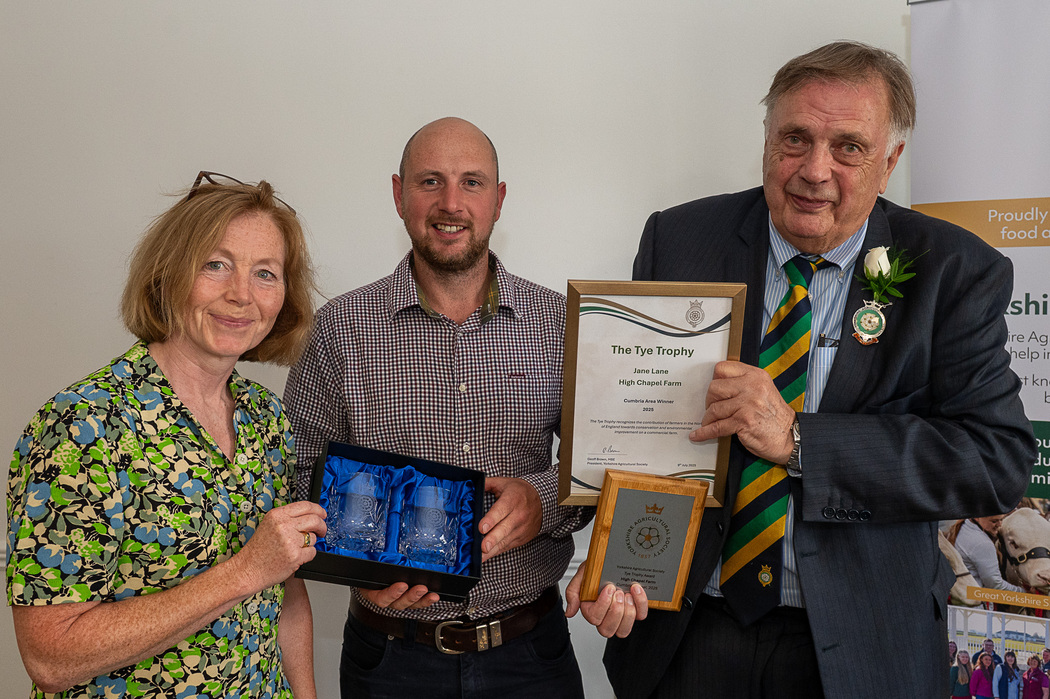
This 1,000-acre holding, lying across a band of Cumbrian fells between the villages of Tebay and Orton, surrounds Tebay Services, the motorway services business – both are owned by the Dunning farming family.
The farm provides beef and lamb for Tebay Services via their own via our butchers. Their beef herd is made up of traditional Northern breeds well suited to land that is classified by DEFRA as Severely Disadvantaged. They are part of an integrated farming system that has persisted on these exposed hills for centuries: turning the only viable crop – grass – into nutritious food while returning fertility to the soil.
Over the next 3 years, just under 3,000 trees will be planted across the farm creating wildlife corridors which connect habitats and sequestering carbon.
A valuable peatland is being restored by by holding water on the land, encouraging rewetting and carbon sequestration, whilst biodiversity is nurtured in its species rich traditional hay meadows. They are introducing more variety to our swards which include legumes and herbs to improve soil health and animal health.
Livestock is moved around for grazing regularly, allowing the ground to rest and the grass to recover, building soil health and improving grassland management.
John and Barbara Dunning’s elder daughter, Jane Lane, leads on the farming side and together with Farm Manager, Sion Morgan, and Assistant Farm Manager, Rosie Sampson, they are delivering outstanding food alongside strong environmental outcomes.
Holme House Farm, Holme-on-Spalding-Moor – East Yorkshire Winner
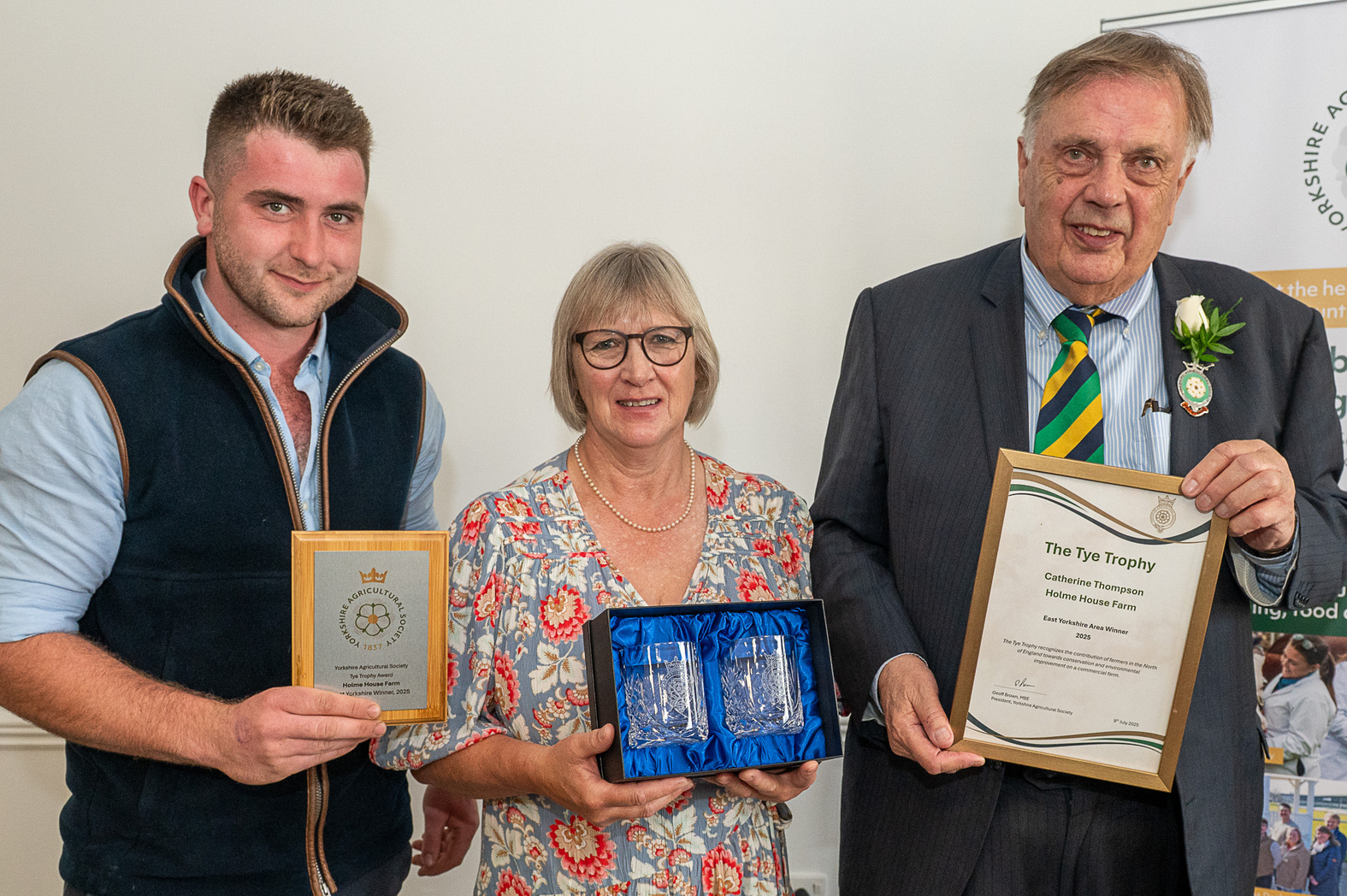
Holme House Farm is run by Catherine Thompson and in recent years, the farm has become more prone to flooding. Catherine and her team have grasped the opportunity provided by Higher Tier stewardship to future proof their business and land from the high flood risk.
They have an emphasis on mixed farming and creating new habitats that can support both livestock and greater numbers of wildlife whilst improving the long term viability of the farm.
River meadows have been enhanced with scrapes and fencing off of river banks to protect water quality and improve livestock management.
Greater emphasis on cover crops and habitats for ground nesting birds has enhanced the arable land whilst maintaining a sound rotational system.
The long term plan is evident of a farm involving cattle, sheep, pigs and arable cropping and tackling the very real threat of future extreme weather causing flooding.
Carter Fold Farm, Waddington – Lancashire Winner
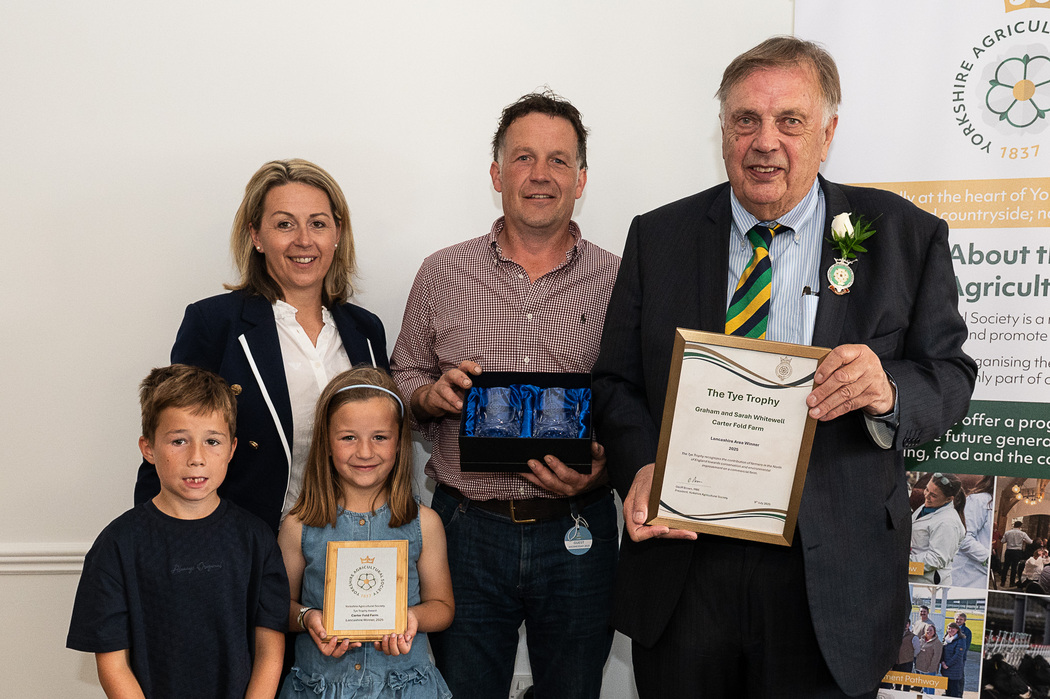
Graham and Sarah Whitwell farm together at Carter Fold as tenants; Graham starts the day with an early milk-round leaving him time to focus on the main farm duties and the family for the rest of the day.
Theirs is a sheep focused farm which takes in neighbouring dairy over the winter and recently purchased beef shorthorn cattle.
There is a small self-service farm shop selling local products located in the old parlour which is well used as this farm is based in the middle of Waddington village.
Through a combination of agri-environment agreements, working with the Ribble Rivers Trust and more recently through a FiPL agreement, extensive environmental improvements have been carried out across the farm. Both Graham and Sarah deliver these works with help from local contractors and volunteers.
Sarah is keen to involve the local community through offering volunteer opportunities such as tree/hedgerow planting and making birdboxes and monitoring the use of these boxes. She has recently kick started a village based swift box scheme.
Sarah has drawn up a Woodland Management Plan which informs the management for the next 10 years-plus. Grant supported capital works across the farm include woodland boundary fencing, riparian buffer strips, orchard creation and an extensive programme of hedgerow restoration across the farm.
Hedgerow restoration works include essential associated fencing and gates which are part of their plan for improved rotational grazing across the farm with forage benefits, shade and shelter as well as soil health, carbon sequestration, natural flood management and wildlife benefits.
The Mill, New Hall Farm, Ardsley – South & West Yorkshire Winner
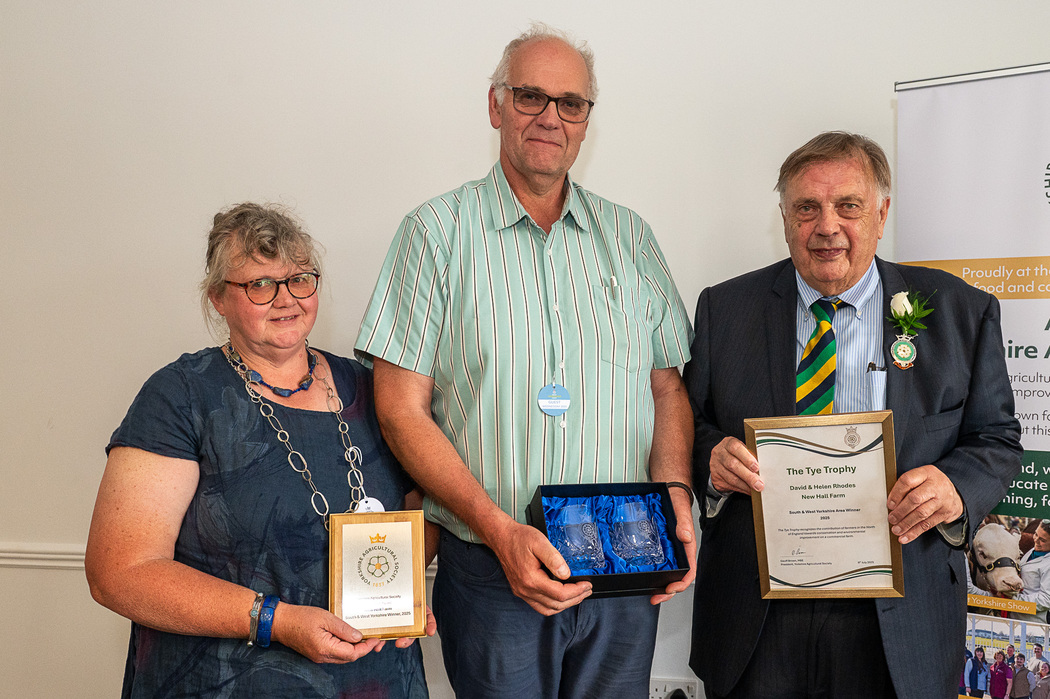
New Hall Farm is a working farm, growing wheat, barley, beans and grass on the outskirts of Barnsley.
Environmental management has been a major part of the Rhodes family’s farming practice for the last 30-plus years.
They have a small flock of sheep grazing some of the stewardship grassland, and pride themselves in running a balanced farming system, producing a quality, affordable food staples whilst maintaining a thriving and diverse wildlife environment, and supporting a number of red and amber list species.
The farm hosts educational visits, providing an opportunity for students to get out in the fields and see what they do first hand.
Broom House Farm, Witton Gilbert – Tyne Tees Winner
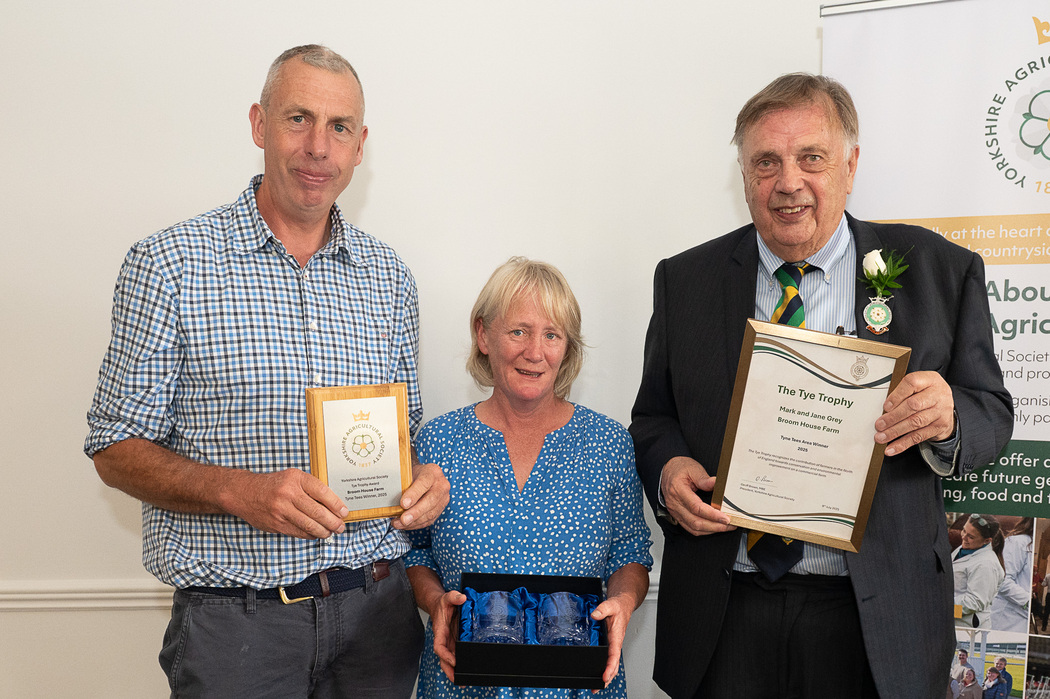
Broom House Farm is run by Mark and Katrina Gray. Theirs is an organic farm in higher tier stewardship, retailing through its farm shop and cafe, and hosting school visits.
The whole farm has been in the Higher Level Countryside Stewardship Scheme with the aim of preserving the beautiful North Durham landscape and improving conditions for wildlife on the farm.
They have restored hay meadows, made wildlife corridors, coppiced hedgerows, planted trees, restored ponds and rebuilt stone walls.
In the 20 years that they have been there, Mark and Katrina have noticed an increase in curlews, brown hares, partridge and lapwing.
West Wharmley Farm, Hexham – Northumberland Winner
Stuart Johnson and family were named Soil Farmer of the Year 2023 by Farm Carbon Toolkit.
Based in Northumberland, Stuart has been transforming his farm over the last 10 years to reduce inputs, improve soil health and livestock productivity.
Moving to a strip-tillage system and mob grazing platform has provided financial success alongside a more resilient business.
Stuart has eliminated fertiliser on his grassland and fungicides in the arable crops, instead utilising an integrated system with the livestock and compost teas to grow what is needed on the farm.
The farm is currently in a seven-year rotation of a five-year legume/herb mix followed by a two-year arable break with full grass grazing for the sheep and cattle, meaning that there is no need to buy in additional supplementary feed over the summer months.

Picture credit: Tony Pick
National Silver Lapwing Award
Each year the overall winner of the Tye Trophy goes forward to take part in the Silver Lapwing Award.
Like the Tye Trophy, this is an award for farmers who have demonstrated real commitment to habitat conservation and species whilst integrating their environmental management within their overall farm business.
The judges also consider the farm’s approach in conserving natural resources as well as its historic features that would include good soil management, efficient use and protection of water quality and energy.
In 2024 David and Rob Cooil, who run Ballagawne Farm in Ballabeg, Isle of Man won the Silver Lapwing Award, which demonstrates the high standards of the Tye Trophy.