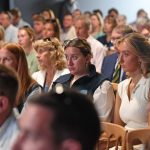
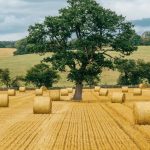
In this blog post, Future Farmers bursary recipients Becks and Gav Lonsdale report back from ORFC ‘In the Field’, held at Hill Top Farm in Malham last month.
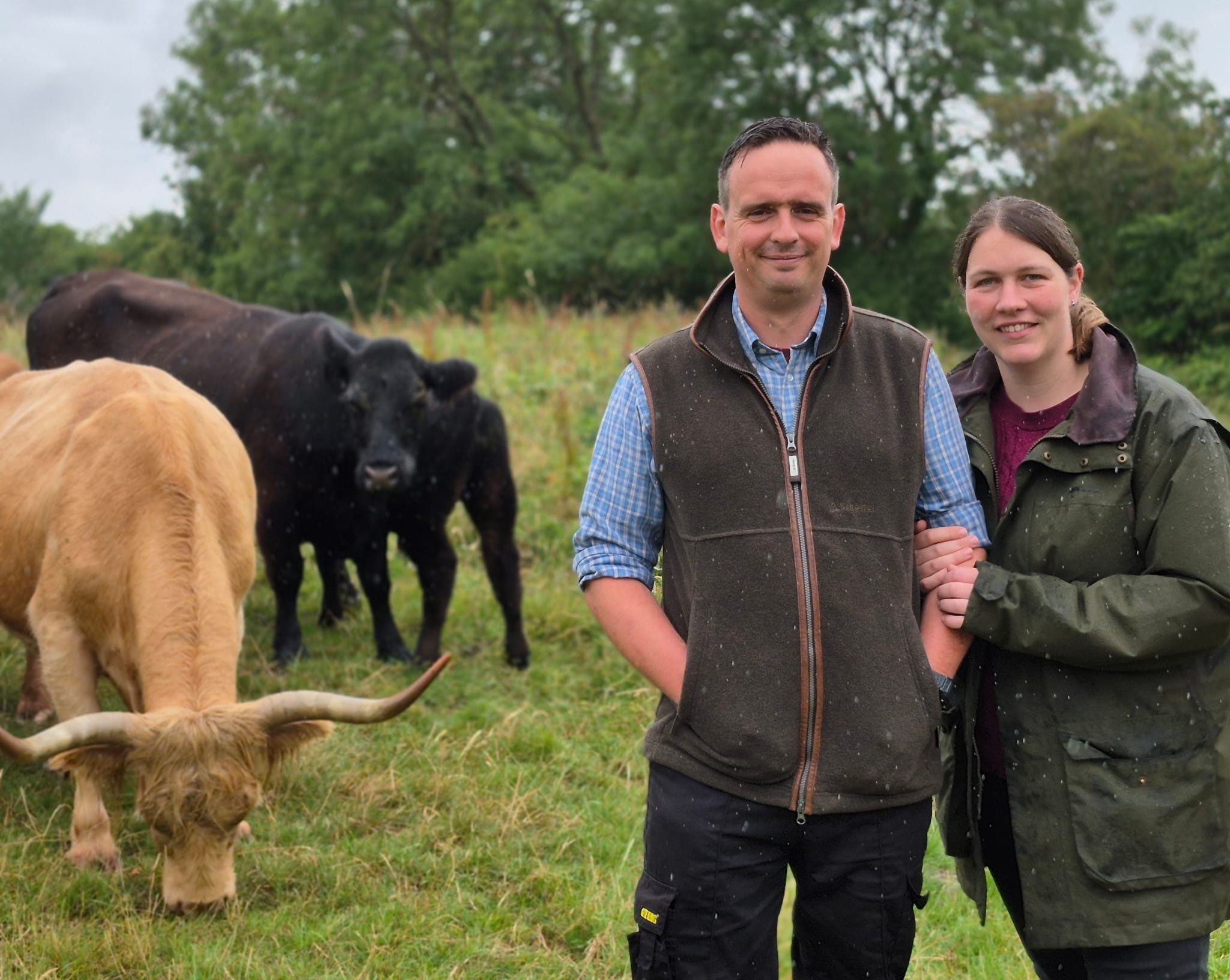
Future Farmers of Yorkshire awarded us – Becks and Gav of Lonsdale Highlands – bursary-funded tickets to Oxford Real Farming Conference’s ‘In The Field’ event at Hill Top Farm in Malham, in the Yorkshire Dales in July 2025.
Holding it there was ideal; it is a living, breathing demonstration of how profitable food production and nature recovery can be symbiotic rather than mutually exclusive.
I don’t know if it was the wild beauty of the landscape, the clearly thriving, life-filled meadows or how contented Neil and Leigh Heseltine appear with the course they are charting, but we came away with the feeling that this is absolutely how farming should be done – resilient, sustainable, profitable and enjoyable.
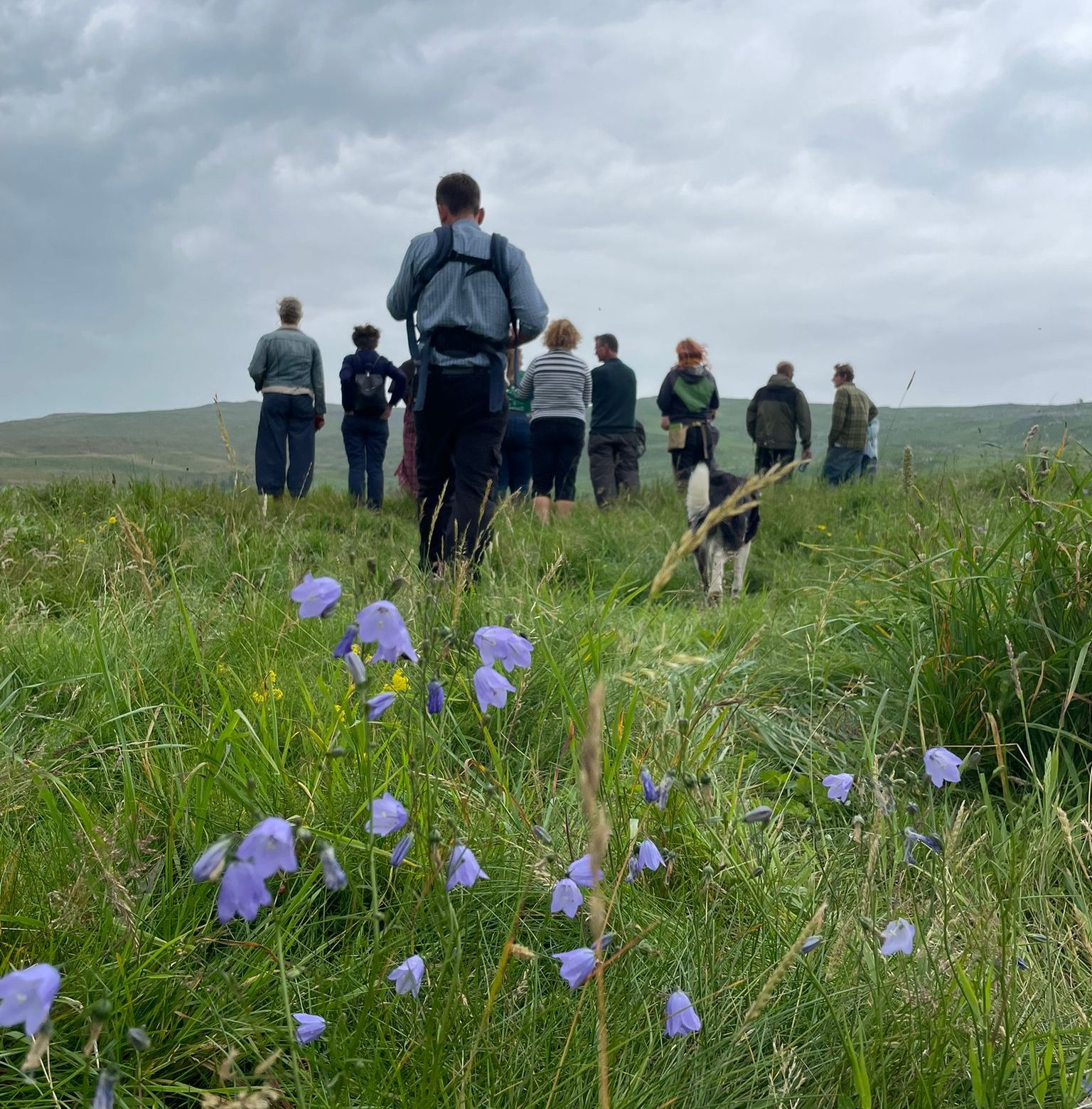
Touring the farm
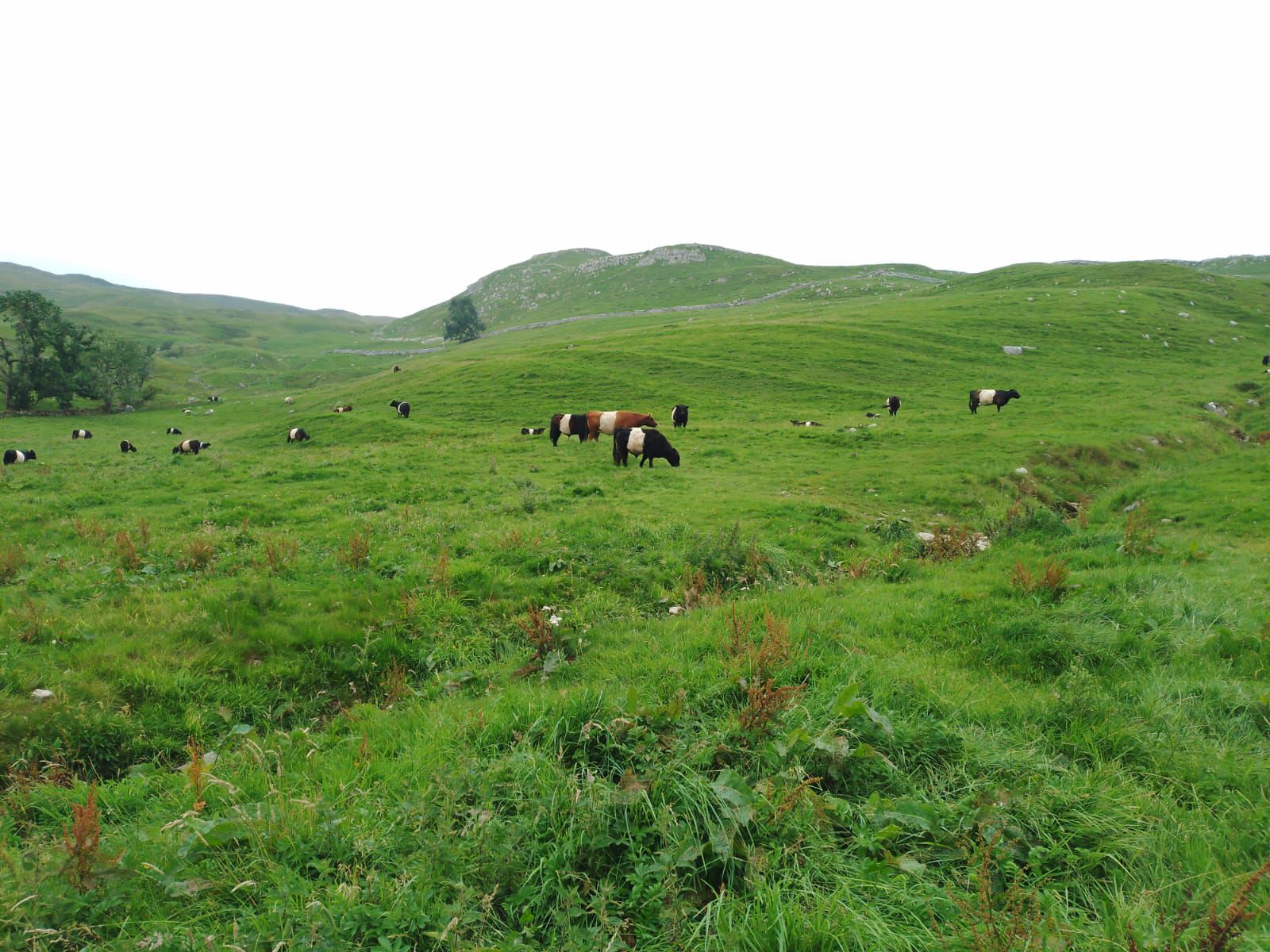
Fourth-generation farmer Neil credits ORFC with a huge influence on his farming evolution, from running sheep conventionally (successful at auctions and shows but making minimal profit) to conservation grazing cattle profitably with the focus on nature recovery and biodiversity.
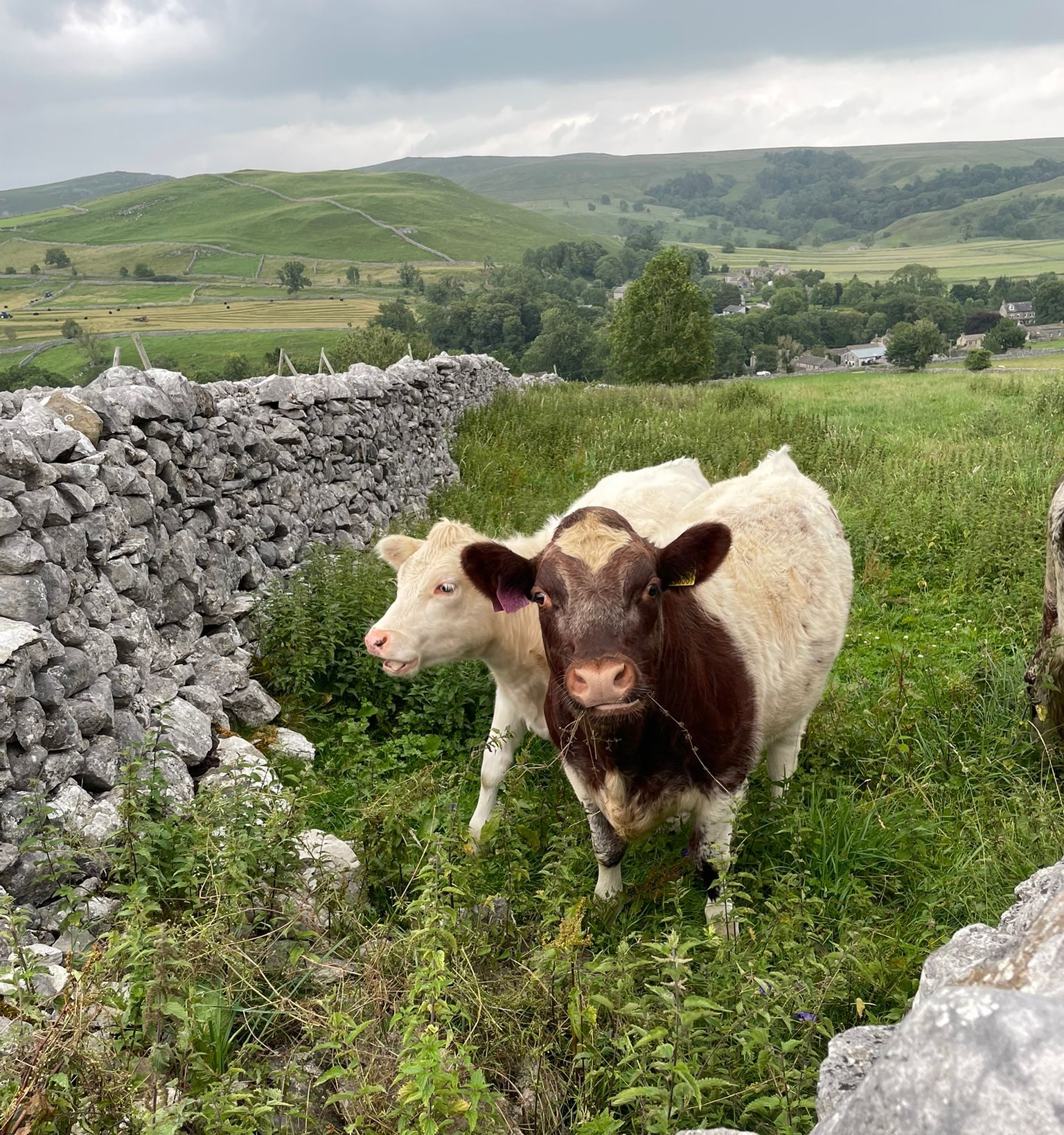
On his farm tour we noted features of the landscape that were formed by historical farming practices, (“so change is nothing to fear”) before discussing the economic realisation Neil came to back in 2012.
He and Leigh divided the figures from their operation into three separate enterprises – sheep, cattle and subsidy income – and realised that although the sheep comprised by far the largest part of both revenue and hours worked over the week, the actual profit made by that section of the business was minimal.
Instead, Neil now happily manages the land for nature via conservation grazing with Belted Galloways, plus a small number of rare Northern Dairy Shorthorns and about 70 sheep.
Hill Top Farm is taking part in the longstanding Hay Time Project, restoring wildflower-filled meadows on their in-bye land.
The Hay Meadow Methods of Restoration workshop had us inspecting a meadow and learning to identify yellow hay rattle, hawkbits, eyebright and many others, and I look forward to being able to recognise more species in our own fields.
What we learnt
During the Cow-Calf Contact Dairying session, Anna Bowen persuasively argued that once Johne’s disease is eradicated the dairy industry should move towards CCC systems as the norm… where calves are kept with and derive milk nutrition from their mother for a minimum of 8 weeks.
The public fundamentally do not like cow-calf separation so it is a difficult balance pushing for recognition of this ethical method to encourage widespread take-up, add value to CCC products and improve welfare without throwing the whole industry under a bus by drawing attention to the fact that cow-calf separation is standard.
Permaculture Design looked at the overall principles of the Permaculture movement, namely “earth care, people care, fair share,” then encouraged useful introspection via the “4 questions:”
- What is going well?
- What are you finding challenging?
- What are your long-term visions and goals for the farm?
- What are your next achievable steps to get there?
In addition to the workshops there were talks on dung beetles and agricultural policy making, plus my favourite lecture of the conference from British Pasture Leather.
The lack of integration between agriculture and the design/fashion industry is astounding when you think about it.
Despite each hide of leather being a unique product with a life story, there has been no way for a designer to find out the provenance, or farmers to use the whole of their beast.
Using a sustainable tanning process within the UK and ensuring hides are traceable mean the costs are currently about eight times higher than untraceable leather (at £200-ish per hide), but there is demand from top-end brands who are looking for sustainability throughout the process.
We had a thoroughly enjoyable and inspiring couple of days and will be looking out for other events organised by ORFC, confident they will be well-run and interesting!
We are very grateful to Future Farmers of Yorkshire for enabling us to attend this one.